This flag was made in Iraq and flown at Joint Base Camp Taji, Iraq, 2017-2018, flying alongside the New Zealand and Australian flags, highlighting our Anzac link on active operations



This flag was made in Iraq and flown at Joint Base Camp Taji, Iraq, 2017-2018, flying alongside the New Zealand and Australian flags, highlighting our Anzac link on active operations
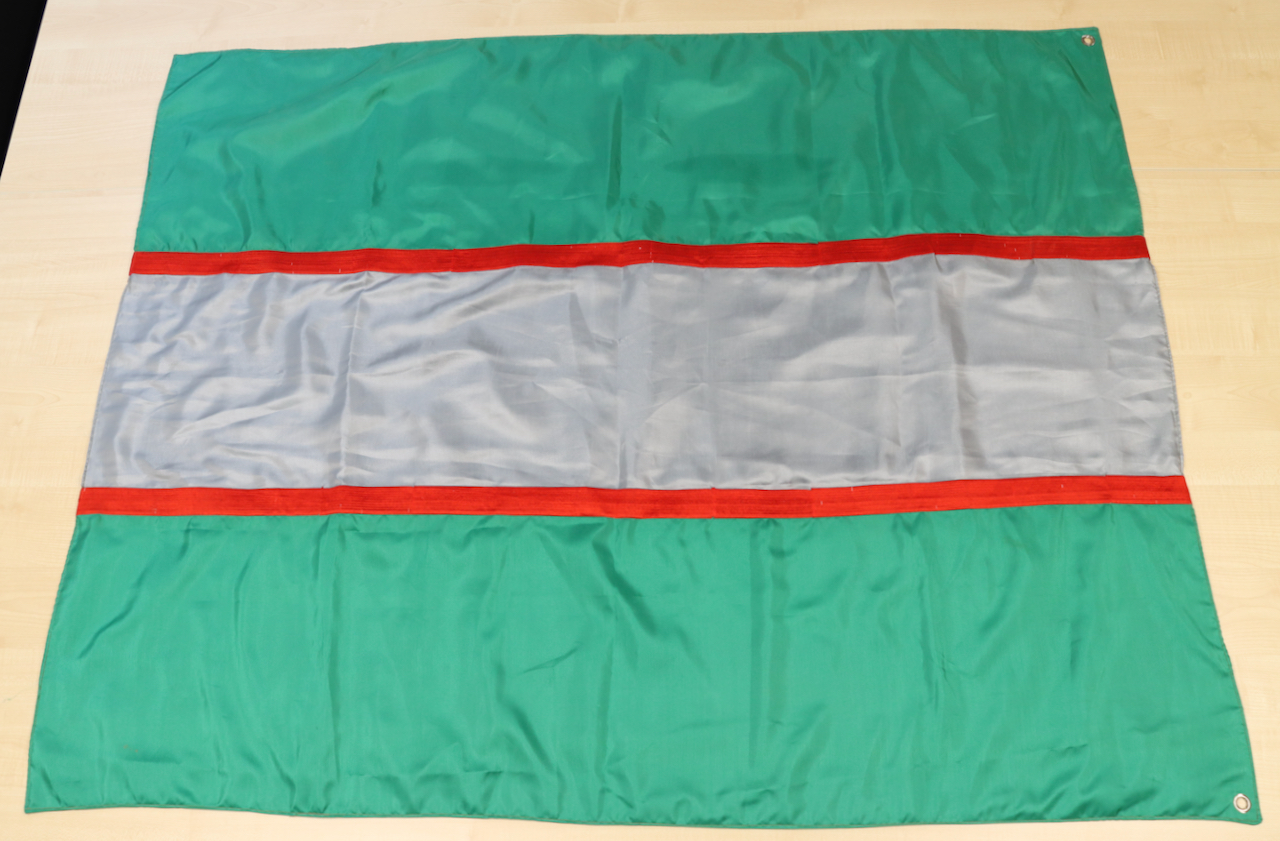
The flag was made in the traditional British Army Intelligence Corps colours, of which both the New Zealand Intelligence Corps and Australian Intelligence Corps were modelled from. It is, in order top to bottom: Cyprus green, scarlet red, French grey, scarlet red, and Cyprus green.
The colours have special significance. Cyprus green for the colours worn from 1916 by Intelligence Corps officers (tabs and hatbands), the colour of the field security police cap covers by 1923, and the colour used on the armbands and shoulder flashes during WWII. Scarlet red for the red rose adopted by the British Army Intelligence Corps. The rose symbolises silence, secrecy, and trustworthiness, and the Latin term sub rosa refers to something done in secret or conversations spoken in confidence. French grey is a little more obscure to pinpoint the origin, however it is commonly believed to now represent the “fog of war” that intelligence operators strive to penetrate to find the truth.
The flag was made in the traditional British Army Intelligence Corps colours, of which both the New Zealand Intelligence Corps and Australian Intelligence Corps were modelled from. It is, in order top to bottom: Cyprus green, scarlet red, French grey, scarlet red, and Cyprus green.
The colours have special significance. Cyprus green for the colours worn from 1916 by Intelligence Corps officers (tabs and hatbands), the colour of the field security police cap covers by 1923, and the colour used on the armbands and shoulder flashes during WWII. Scarlet red for the red rose adopted by the British Army Intelligence Corps. The rose symbolises silence, secrecy, and trustworthiness, and the Latin term sub rosa refers to something done in secret or conversations spoken in confidence. French grey is a little more obscure to pinpoint the origin, however it is commonly believed to now represent the “fog of war” that intelligence operators strive to penetrate to find the truth.


From museum visits to research support, our team is ready to assist you on your journey through New Zealand’s military history.