Learn about the tools of the trade for an Intelligence Section soldier in WWII



Learn about the tools of the trade for an Intelligence Section soldier in WWII
We have many examples of the tools of their trade; from escape maps and compass buttons in Prisoner of War camps, to a dog-mounted telephone wire spool for laying communication lines, stories of home-front intelligence gathering with knitters knitting messages into scarves, as well as WWII issued Intelligence Section (“I” Section) equipment.
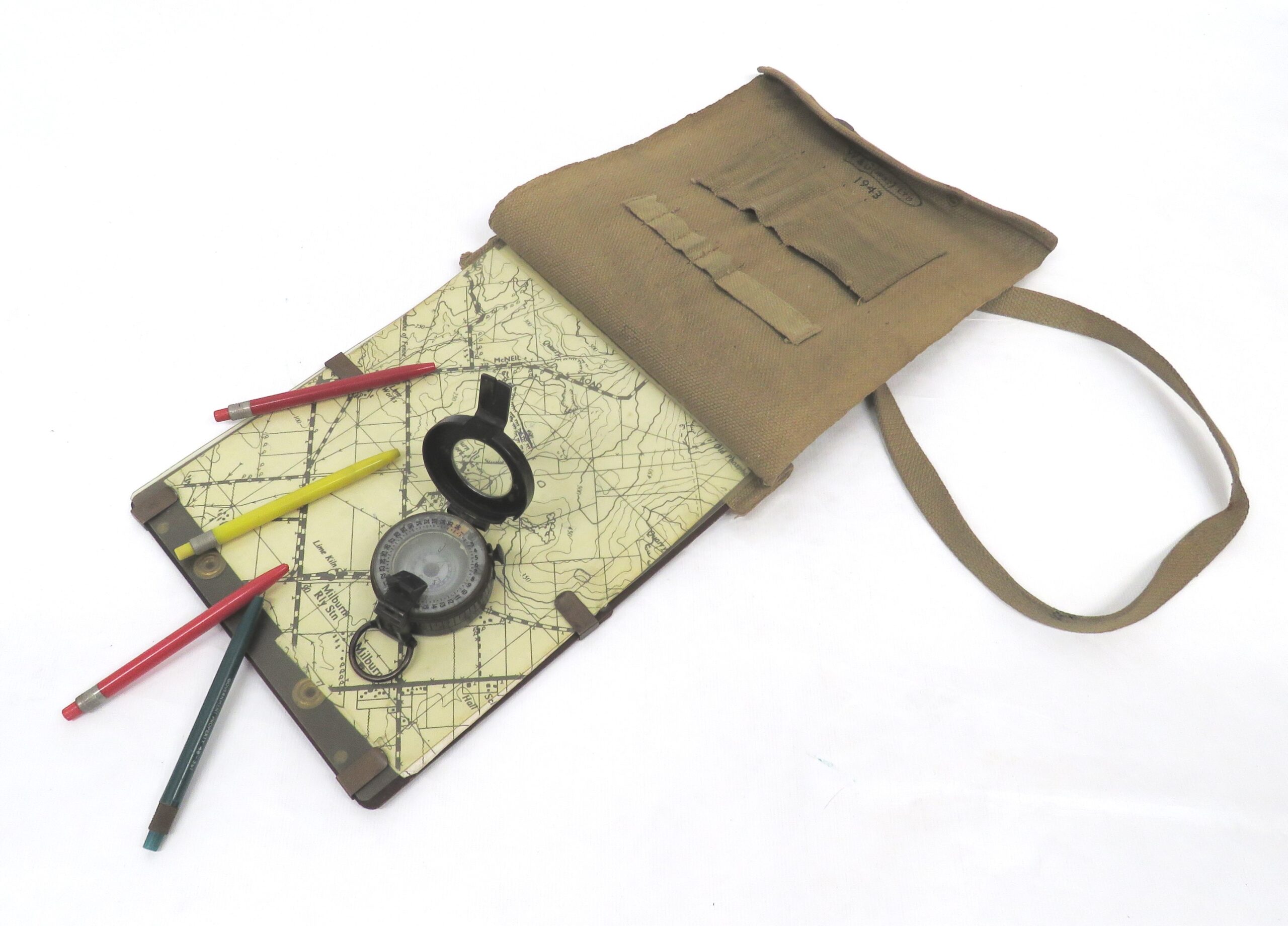
These items are from our collection and show what a soldier in an “I” Section would be equipped with in WWII. It would include a prismatic compass with luminous markings for night work, a map case, small sheets of talc (not pictured), and a supply of chinagraph pencils. This is similar to what New Zealander Geoffrey Duff was given when he became part of an “I” Section based in Italy in WWII. In his book Army Days he recounts his experiences working as a soldier in an “I” Section through diary entries, recollections, and letters home. It is well worth a read if you can get your hands on a copy.
We have many examples of the tools of their trade; from escape maps and compass buttons in Prisoner of War camps, to a dog-mounted telephone wire spool for laying communication lines, stories of home-front intelligence gathering with knitters knitting messages into scarves, as well as WWII issued Intelligence Section (“I” Section) equipment.
These items are from our collection and show what a soldier in an “I” Section would be equipped with in WWII. It would include a prismatic compass with luminous markings for night work, a map case, small sheets of talc (not pictured), and a supply of chinagraph pencils. This is similar to what New Zealander Geoffrey Duff was given when he became part of an “I” Section based in Italy in WWII. In his book Army Days he recounts his experiences working as a soldier in an “I” Section through diary entries, recollections, and letters home. It is well worth a read if you can get your hands on a copy.

From museum visits to research support, our team is ready to assist you on your journey through New Zealand’s military history.