We’ve all heard the adage, “An army marches on its stomach,” but what does that actually look like when you’re out in the field or on the front lines?



We’ve all heard the adage, “An army marches on its stomach,” but what does that actually look like when you’re out in the field or on the front lines?
This equipment was invented by James Wiles, who served with the Australians during the Boer War. He observed that there was an urgent need for catering equipment for the front line troops. He conceived the idea of a steam cooker, realising that steaming vegetables was much better than boiling them. His first cooker was made and used by the AIF in Egypt and France during WW1 with great satisfaction from the troops. 300 of his original design were manufactured.
Following WW1, the Australian Army made a decision to standardise all equipment to British Army methods, discontinued the use of the original Wiles Cooker, and reverted to the use of antiquated British methods. Disappointed, James sold his engineering workshop in Ballarat, NSW.
In the late 1930s, with war appearing imminent, he hoped that some top Army officials would see the light and reintroduce his steam cooker invention that had been so highly regarded. Unfortunately Jim died in August 1939, but had requested that if war broke out his four sons would carry on his dream.
Fighting military bureaucracy all the way they firstly produced and had accepted stationary kitchens, then a larger 4-wheeled mobile kitchen. In late 1942 the Army Catering Corps requested a small two-wheeled cooking unit to cater for 100-150 personnel to be towed by a jeep or possibly dropped by parachute into inaccessible areas. The weight was not to exceed one ton. When produced, this trailer was mounted with a boiler, roasting oven, four small steamers or stock pots, a cold water tank for boiler supply, and a 20 gallon copper insulated tank. It was named “The Junior Mobile Cooker”.
It was to be used extensively by the Army until 1980, and was used continually by the Australian and New Zealand Army in both the Korean and Vietnam Wars. Our example was produced in 1952.
As a truly mobile kitchen, meals could still be cooked while on the move. It was stated that “Convoy movements are normally 25 mph (40km/h), and this speed can be maintained without any loss of efficiency or delay. A speed of 35 mph (55 km/h) has been attained and maintained for some miles on good roads.”
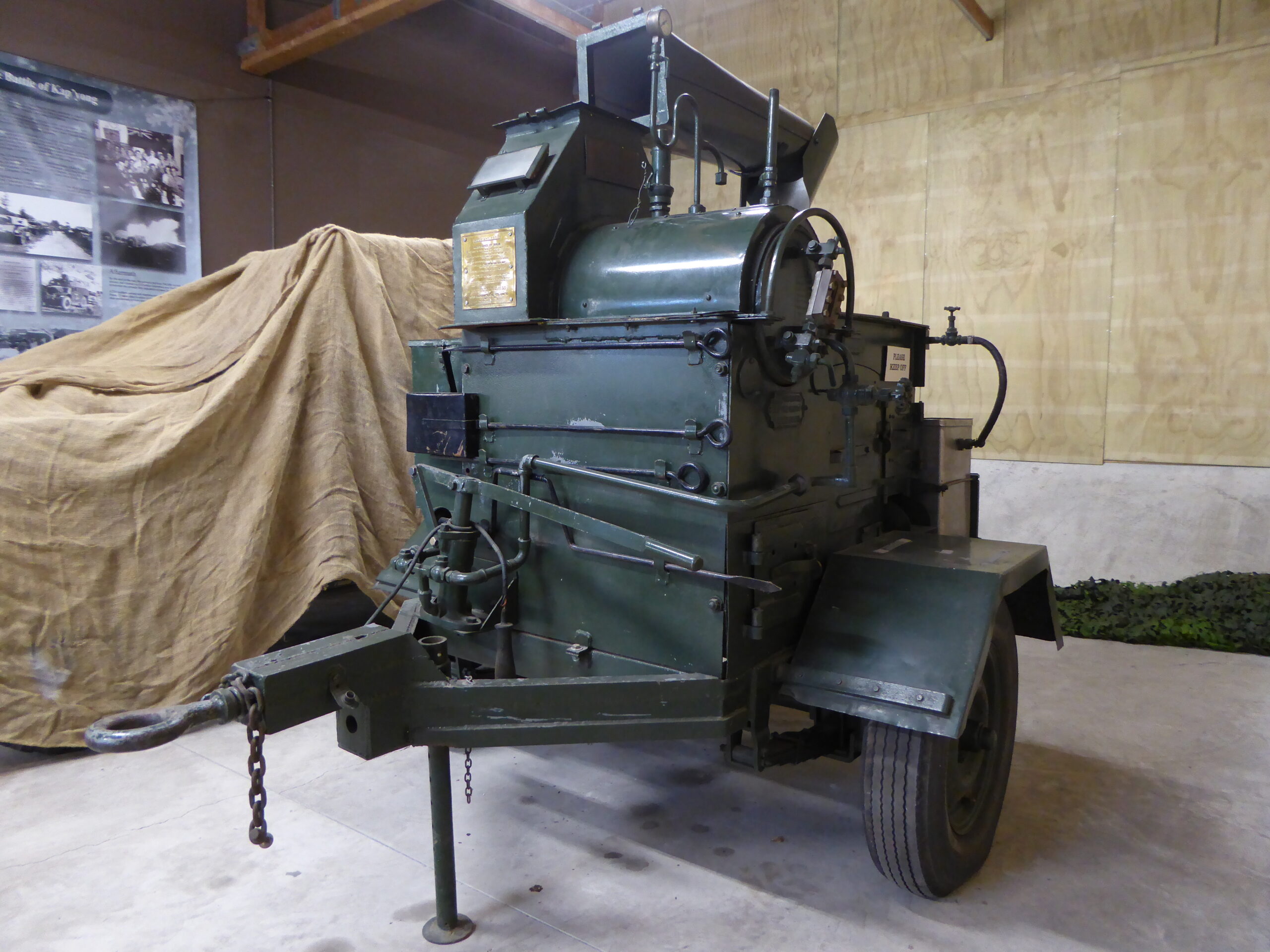
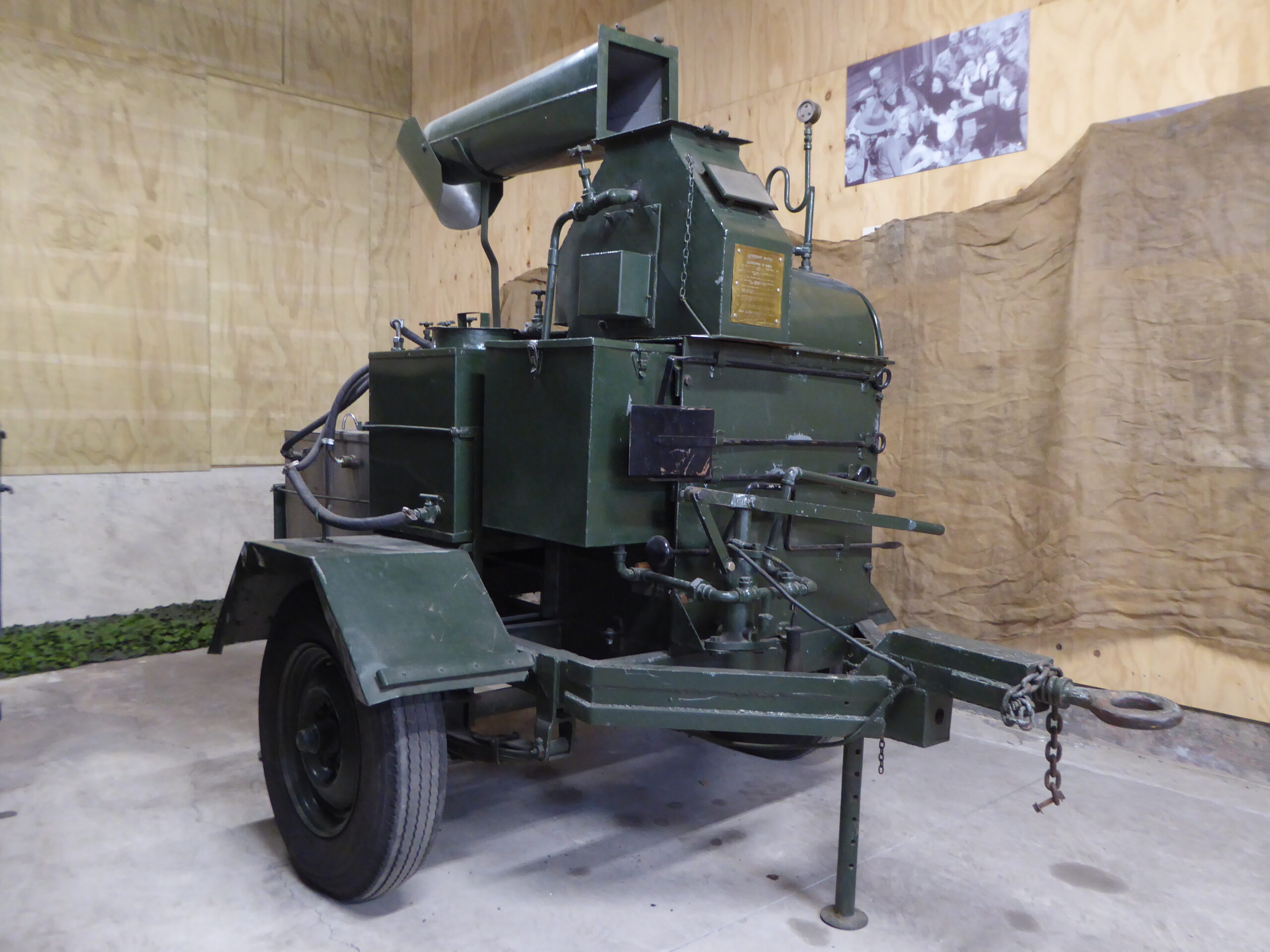
This equipment was invented by James Wiles, who served with the Australians during the Boer War. He observed that there was an urgent need for catering equipment for the front line troops. He conceived the idea of a steam cooker, realising that steaming vegetables was much better than boiling them. His first cooker was made and used by the AIF in Egypt and France during WW1 with great satisfaction from the troops. 300 of his original design were manufactured.
Following WW1, the Australian Army made a decision to standardise all equipment to British Army methods, discontinued the use of the original Wiles Cooker, and reverted to the use of antiquated British methods. Disappointed, James sold his engineering workshop in Ballarat, NSW.
In the late 1930s, with war appearing imminent, he hoped that some top Army officials would see the light and reintroduce his steam cooker invention that had been so highly regarded. Unfortunately Jim died in August 1939, but had requested that if war broke out his four sons would carry on his dream.
Fighting military bureaucracy all the way they firstly produced and had accepted stationary kitchens, then a larger 4-wheeled mobile kitchen. In late 1942 the Army Catering Corps requested a small two-wheeled cooking unit to cater for 100-150 personnel to be towed by a jeep or possibly dropped by parachute into inaccessible areas. The weight was not to exceed one ton. When produced, this trailer was mounted with a boiler, roasting oven, four small steamers or stock pots, a cold water tank for boiler supply, and a 20 gallon copper insulated tank. It was named “The Junior Mobile Cooker”.
It was to be used extensively by the Army until 1980, and was used continually by the Australian and New Zealand Army in both the Korean and Vietnam Wars. Our example was produced in 1952.
As a truly mobile kitchen, meals could still be cooked while on the move. It was stated that “Convoy movements are normally 25 mph (40km/h), and this speed can be maintained without any loss of efficiency or delay. A speed of 35 mph (55 km/h) has been attained and maintained for some miles on good roads.”

From museum visits to research support, our team is ready to assist you on your journey through New Zealand’s military history.